— Black Friesian horses for sale · Wellington, FL
The black Friesian
— the breed standard.
Solid black is the only coat the KFPS studbook permits for full registration. A small forehead star is allowed; everything else disqualifies. Every pure Friesian on our estate is black — stallion, mare, gelding, foal — exactly to the breed standard that has held since the studbook was founded in 1879.
Prices are not listed. Send a note with the horse you are interested in and a fair offer.
By Lieke de VriesLast updated
— 12 black Friesians on the property
See all remaining horses →Foal · Future Sport
Wybren jr.
- Age
- 1 yrs
- Height
- 13.2 hh
- Studbook
- KFPS
Offers invited
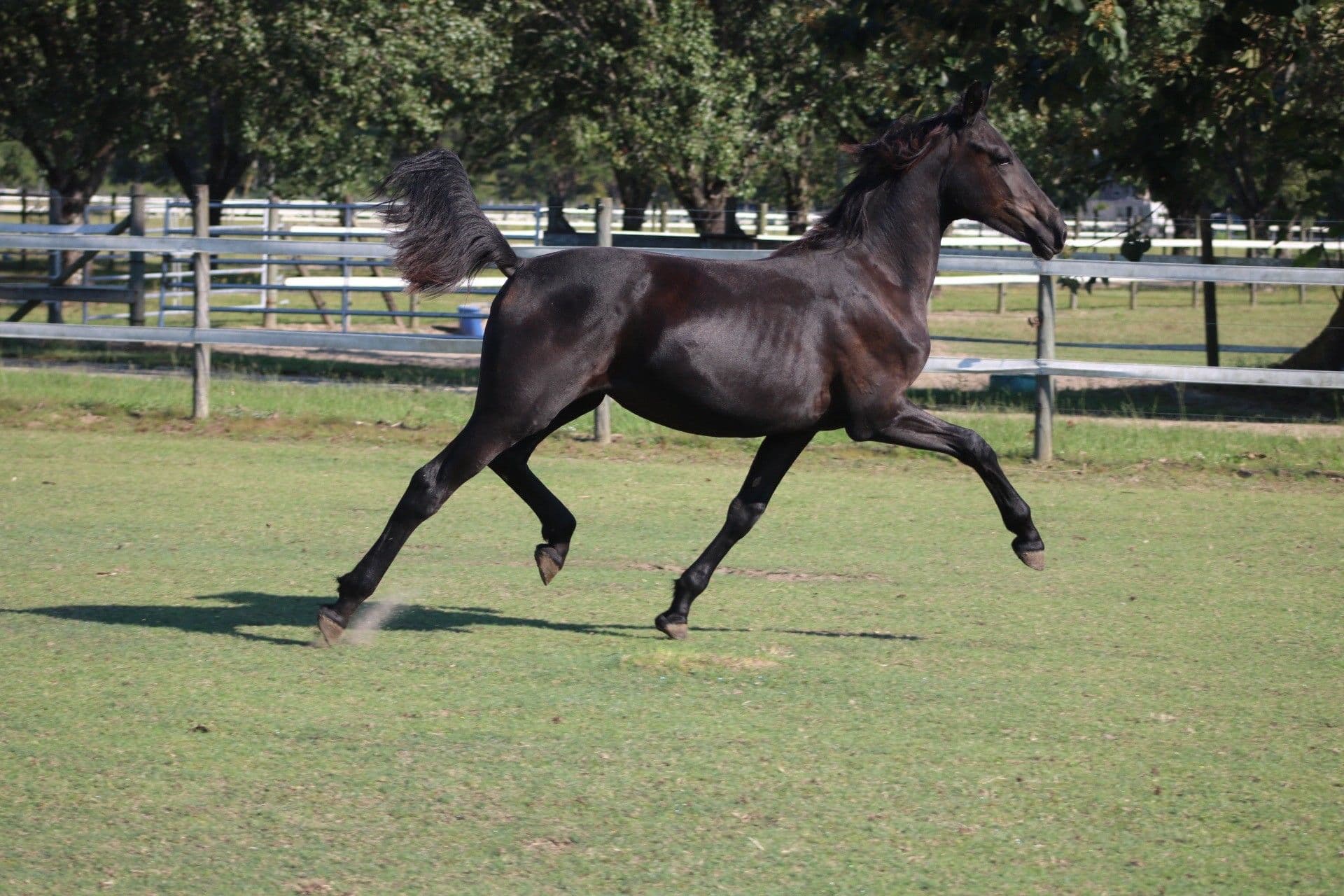
Foal · Young Horse · Future Sport
Reinske fan de Klokslach
- Age
- 2 yrs
- Height
- 16.3 hh
- Studbook
- KFPS
Offers invited
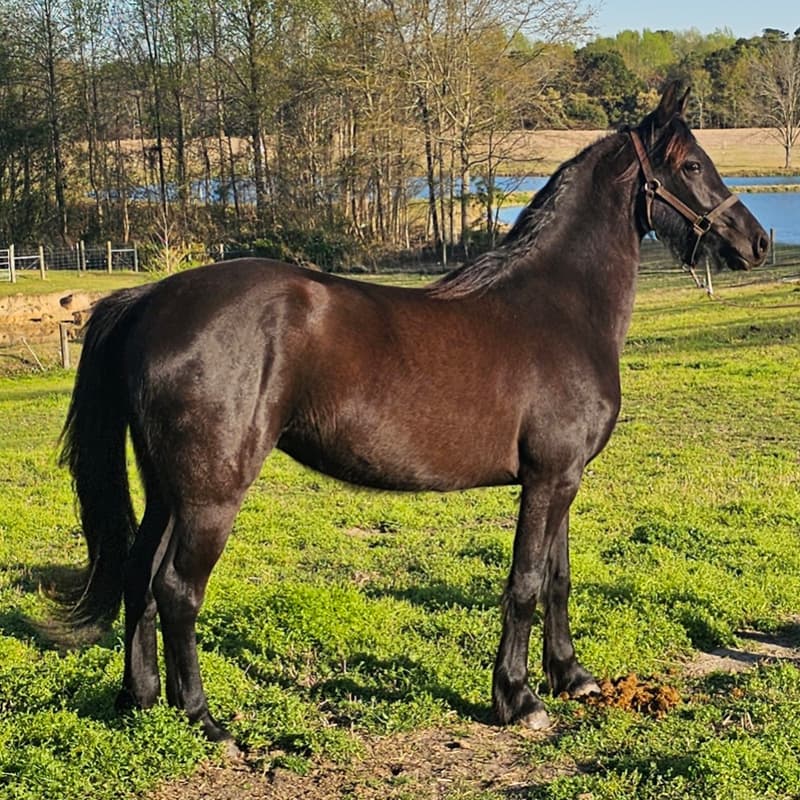
Mare · Sport · Dressage
Saskia fan de Bergen
- Age
- 4 yrs
- Height
- 16.0 hh
- Studbook
- KFPS
Offers invited
Mare · Young Horse
Doutzen fan It Wetterskip
- Age
- 4 yrs
- Height
- 16.0 hh
- Studbook
- KFPS
Offers invited
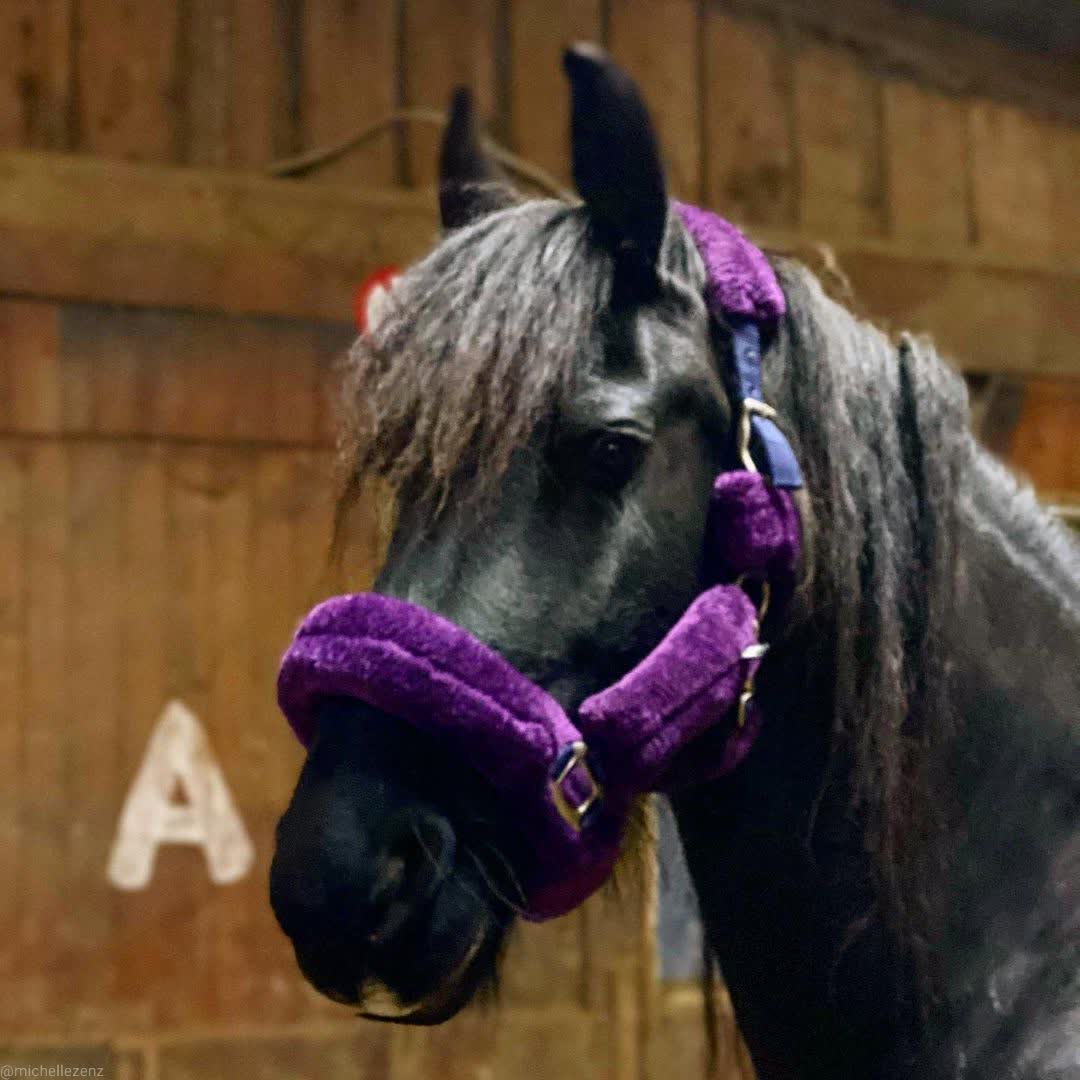
Mare · Dressage · Young Horse
Tjalda fan Fjord
- Age
- 6 yrs
- Height
- 16.0 hh
- Studbook
- KFPS
Offers invited
Mare · Dressage
Anouk fan de Greppel
- Age
- 7 yrs
- Height
- 16.3 hh
- Studbook
- KFPS
Offers invited
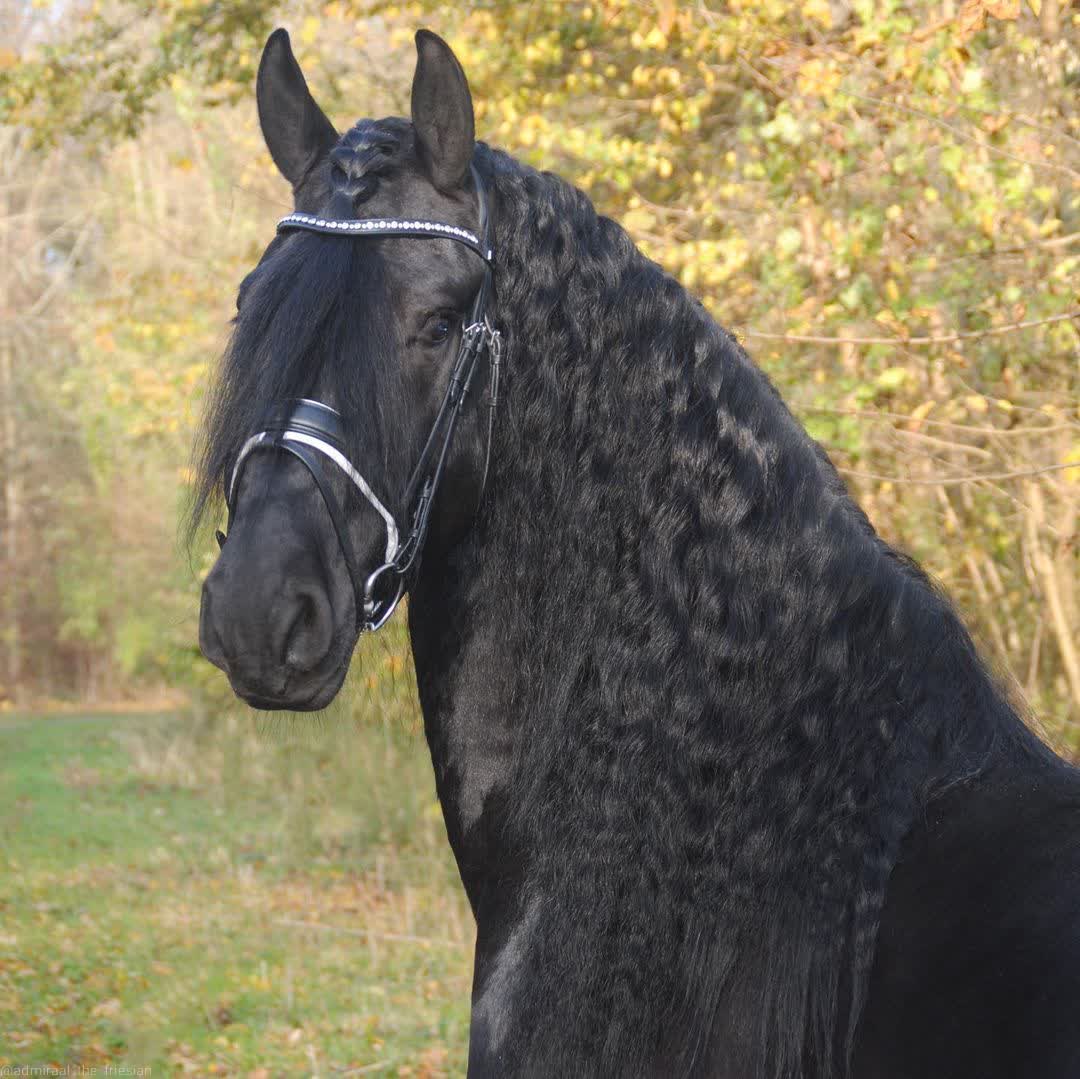
Gelding · Dressage
Sjoerd van de Meer
- Age
- 8 yrs
- Height
- 16.2 hh
- Studbook
- KFPS
Offers invited
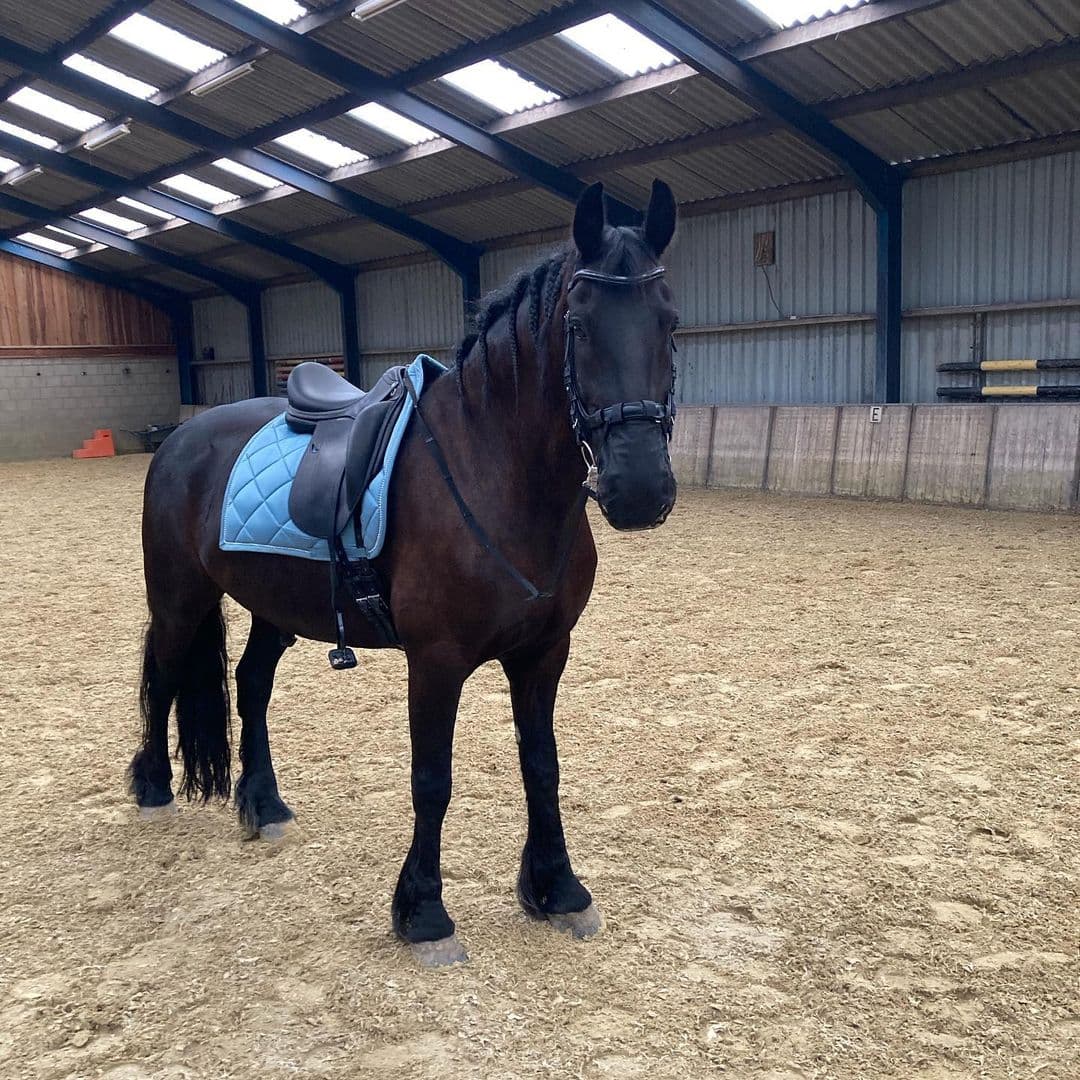
Gelding · Show & Pleasure
Hendrik van Noordwyk
- Age
- 9 yrs
- Height
- 16.0 hh
- Studbook
- KFPS
Offers invited
Mare · Driving
Femke fan Laagland
- Age
- 10 yrs
- Height
- 15.3 hh
- Studbook
- KFPS
Offers invited
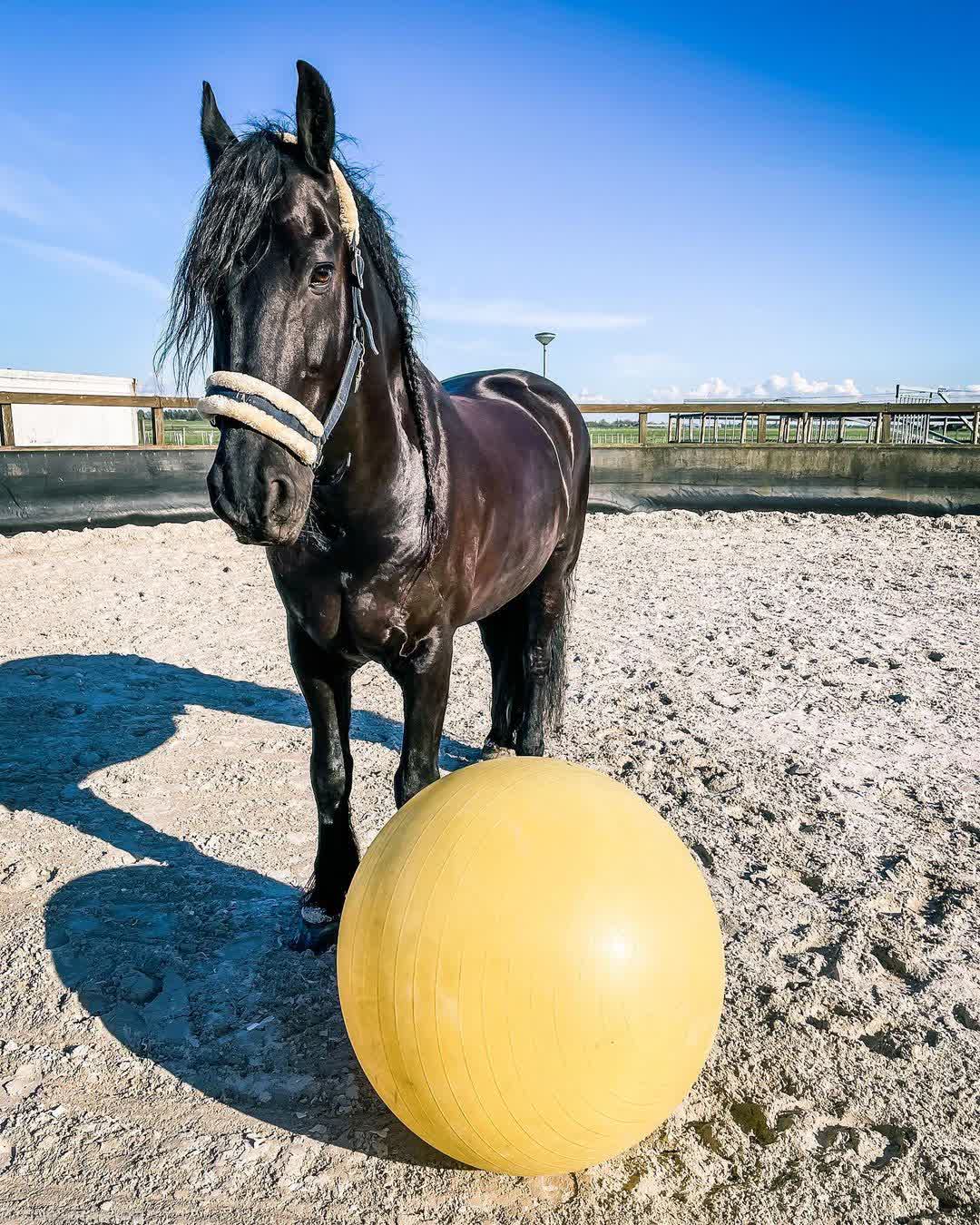
Gelding · Pleasure · Trail · Driving
Lieuwe van de Heide
- Age
- 11 yrs
- Height
- 15.3 hh
- Studbook
- KFPS
Offers invited
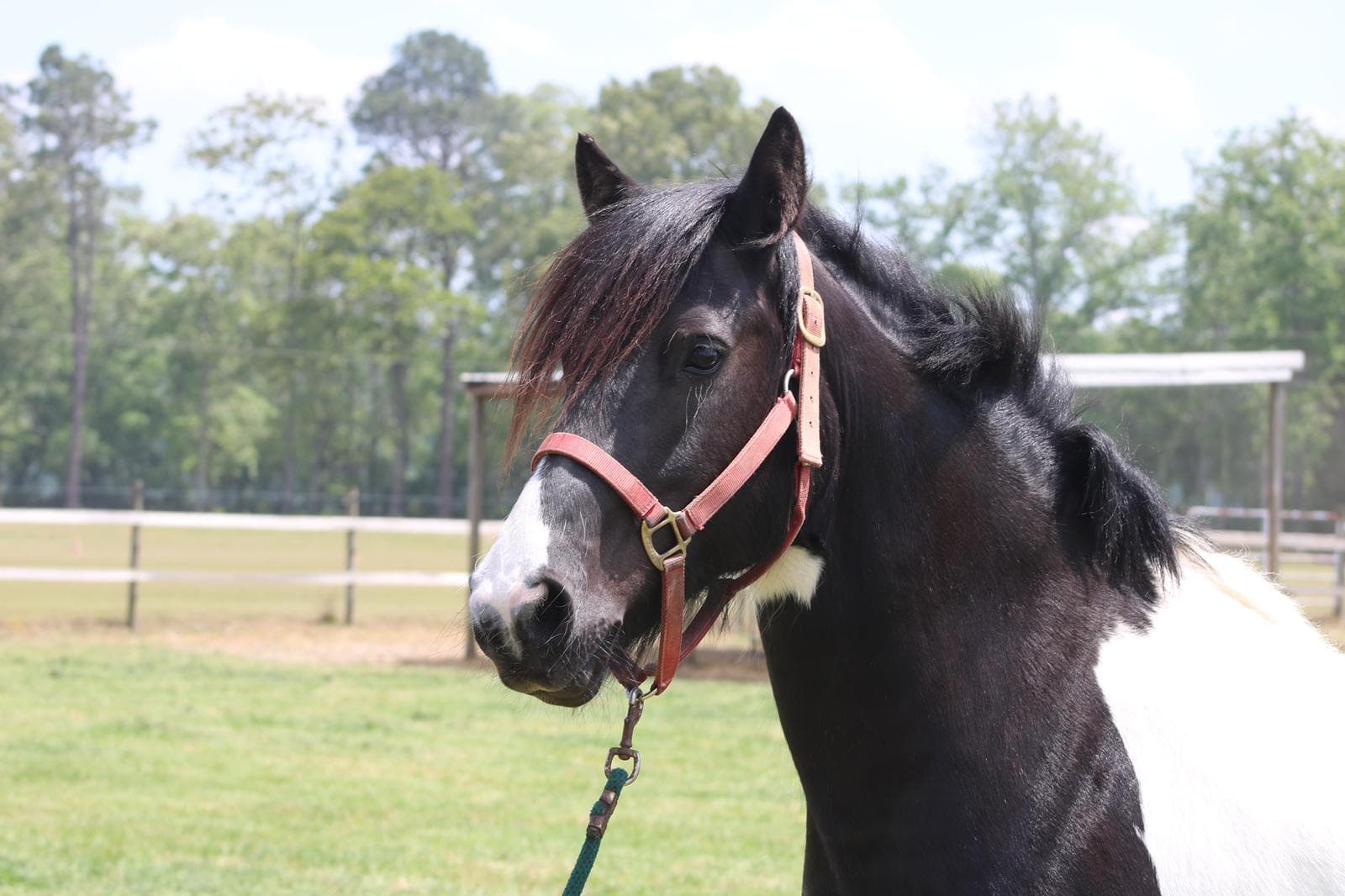
Mare · Pleasure · Trail · Driving
Marrit fan Lieke
- Age
- 13 yrs
- Height
- 14.3 hh
- Studbook
- FSHR · half Gypsy Vanner
Offers invited
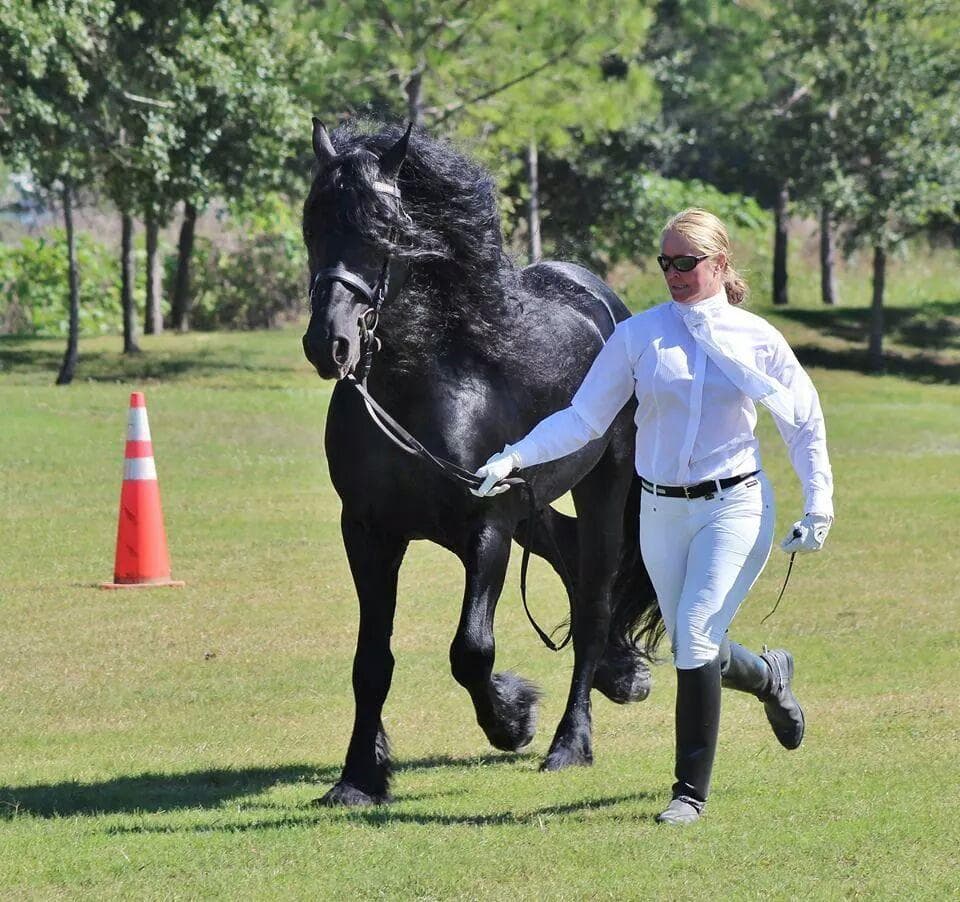
Stallion · Foundation · Retired
Sytse fan it Wetterlân
- Age
- 26 yrs
- Height
- 16.3 hh
- Studbook
- KFPS Approved
Offers invited
— The black coat
Why the breed
is one colour.
Black in horses is controlled by two genes — Extension (E) and Agouti (A). A black Friesian is EE or Ee at Extension and aa at Agouti. The breed has been selected on those two genotypes for over a century, and the result is the most uniform coat in any major riding breed.
The recessive chestnut gene (e) was carried at low frequency in the Friesian population for generations without anyone noticing — the homozygous-black majority masked it. When modern DNA testing arrived in the early 2000s, KFPS began identifying carriers and adjusting breeding recommendations to prevent chestnut foals from registered pairings. Today, a homozygous-black-tested stallion (EE) is a meaningful selling point.
The practical effect for a buyer: every horse on this page is the same deep black, and stays that way for the horse’s lifetime. Florida sun bleaches the coat reddish by August and it deepens again by January — that’s sun-fade, not a genetic change. Shade, fly sheets, and limited mid-day turnout keep the coat closer to its winter black year-round.
The white-marking rule is studbook policy, not coat genetics. A small forehead star is allowed because it is cosmetically minor; a sock, blaze, or body white is not, because the studbook is preserving the visual breed standard. A Friesian with a sock can still be a beautiful horse — it just cannot be fully KFPS registered.
— Colour guide
Friesian horse colours.
Black, chestnut, white, grey, blue roan — what’s real and what’s marketing.
— Sport horse
The Friesian sport horse.
Friesian crosses — and why many of them are also black.
— All horses
The full estate inventory.
Including the non-black sport-cross horses on the property.
— Frequently asked
Black Friesians — common questions.
- Are all Friesian horses black?
- All KFPS-registered pure Friesian horses are black. The studbook permits only one coat — a solid black, with a small forehead star allowed. Any other white markings on the body, legs, or face disqualify a horse from full KFPS registration. Friesian-cross horses (Friesian × Andalusian, × Quarter Horse, × Gypsy Vanner) can be any colour their non-Friesian parent brings.
- Why are Friesian horses black?
- Centuries of selective breeding by the KFPS studbook and its predecessors. Black has been the breed standard since the studbook was founded in 1879, and any non-black foals from registered pairings are not eligible for full registration. The black is genetically recessive (the EE/Ee genotype), and the studbook has tested for and selected against the chestnut gene (e/e) for decades.
- Can a Friesian be born any colour other than black?
- Very rarely a Friesian is born chestnut — sometimes called "red" or "fox" Friesian. This happens when both parents carry the recessive chestnut gene; the foal is genetically pure Friesian but cannot be fully KFPS registered as a stallion or as a model mare. KFPS now tests breeding stock for the chestnut gene to prevent surprise foals. Chestnut Friesians are not eligible for full registration but are otherwise the same horse.
- What is the difference between a black Friesian and a black Friesian sport horse?
- A black Friesian is a pure-bred KFPS-registered Friesian; the coat is the studbook standard. A black Friesian sport horse is a Friesian-cross with at least 25% Friesian blood that happens to be black — Friesian × Andalusian, × Quarter Horse, or × Gypsy Vanner crosses are often black because the Friesian's black gene is usually dominant. The cross is registered with FSHR, not KFPS, and is typically smaller and less expensive than the pure breed.
- Are black Friesian horses more expensive than other colours?
- Black is the only colour for pure registered Friesians, so the question rarely arises. A chestnut pure-bred Friesian (the rare exception) is typically cheaper because it cannot be fully registered. Among Friesian sport-cross horses, black usually sells at a premium over bay, grey, or palomino sport-crosses, because black is what most buyers want when they buy into the Friesian look.
- Do black Friesian horses fade in the sun?
- Yes — fading is a normal and well-documented part of owning a black horse, including Friesians. Long pasture days, particularly in Florida sun, can turn the coat a reddish or copper black by late summer. Shade, fly sheets, and limited turnout hours in peak sun reduce fading. The coat returns to deep black by winter. Sun-bleaching is cosmetic — it does not affect the horse's health or its KFPS registration.
— Make an offer
Speak with the family.
Tell us which black Friesian you are interested in and what feels fair.